Choosing the right kitchen countertop thickness is one of those decisions that seems simple until you start shopping. You see slabs at 2cm, 3cm, and sometimes even thicker, and suddenly you’re wondering what actually matters and what’s just a markup.
The truth is, thickness affects more than appearance. It influences durability, installation requirements, cost, and even the structural support your cabinets need. Whether you’re leaning toward quartz, granite, marble, or laminate, understanding your options upfront saves time and money.
At Granex Kitchen, we help homeowners across Long Island, from Patchogue to Brookhaven and beyond, navigate these choices every day. Here’s what you need to know before committing to a slab.
What Is the Standard Countertop Thickness?
The standard countertop thickness for most kitchens is 3cm, which equals roughly 1 ¼ inches. This has become the industry default for natural stone and engineered stone because it provides the right balance of strength, weight, and visual presence.
A 3cm slab is thick enough to span across cabinets without requiring a plywood substrate underneath, which simplifies installation and reduces overall cost. It also delivers a substantial, high-end look that most homeowners prefer.
That said, 2cm slabs (about ¾ inch) are still available and commonly used in certain applications. They’re lighter and less expensive per square foot, but they almost always need a plywood or MDF substrate for support, which adds labor and material costs back into the equation.
Kitchen Countertop Thickness by Material
Not every countertop material comes in the same thickness options. Here’s a breakdown of what to expect based on the material you choose.
Quartz Countertop Thickness
Quartz countertop thickness is typically available in 2cm and 3cm options. Most kitchen installations use 3cm because it eliminates the need for additional substrate and creates a clean, modern edge profile.
Some manufacturers also offer ultra-compact quartz surfaces as thin as 1.2cm, designed primarily for wall cladding or overlay applications rather than primary kitchen countertops.
At Granex Kitchen, we carry a wide selection of quartz slabs and can help you determine which thickness works best for your layout and budget.
Granite Countertop Thickness
Granite countertop thickness follows the same general standard. You’ll find slabs in 2cm and 3cm, with 3cm being the preferred choice for kitchen countertops.
Granite is a dense, heavy material, and a 3cm slab provides excellent durability without needing extra support. A 2cm granite slab works well for bathroom vanities or areas with shorter spans, but it needs plywood backing for kitchen use.
Marble Countertop Thickness
Marble is generally available in 2cm and 3cm thicknesses. Because marble is softer than granite and quartz, the thicker option is strongly recommended for kitchens where the countertop will see heavy daily use.
A 3cm marble slab resists chipping along edges better and holds up to the wear of a busy kitchen.
Laminate Countertop Thickness
Laminate countertop thickness is measured differently because laminate is a thin surface material bonded to a particleboard or MDF substrate. The total thickness, including the substrate, usually falls between ¾ inch and 1 ½ inches.
Laminate is the most budget-friendly option, but it doesn’t offer the same longevity or resale value as stone or engineered stone surfaces.
Butcher Block and Concrete Countertop Thickness
Butcher block countertop thickness ranges from 1 ½ inches to 3 inches, depending on the manufacturer and wood species. Thicker butcher block creates a more rustic, substantial look and allows for sanding and refinishing over the years.
Concrete countertop thickness is usually around 1 ½ to 2 inches. Concrete countertops are custom-poured, so thickness can be adjusted based on design preferences, though going too thin compromises structural integrity.
Does Countertop Thickness Affect Durability?
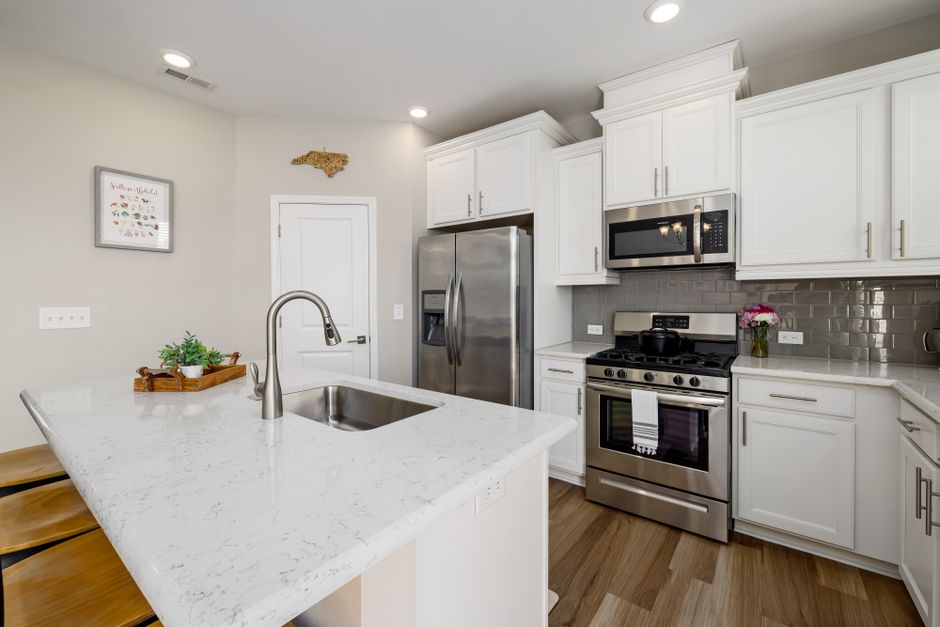
Yes, thicker countertops are generally more durable. A 3cm slab is significantly stronger than a 2cm slab and far less likely to crack during fabrication, transport, or daily use.
Thicker countertops also handle cutouts better. If your kitchen design includes an undermount sink, cooktop cutout, or faucet holes, a 3cm slab maintains more structural integrity around those openings.
For Long Island homeowners investing in a kitchen remodel, spending a bit more on a 3cm slab often pays off in longevity and peace of mind. The team at Granex Kitchen always evaluates your specific layout to recommend the thickness that will perform best over time.
How Thick Should Countertops Be for an Overhang?
Countertop overhang thickness matters when you’re planning a breakfast bar or island seating area. Standard overhangs of 1 to 1.5 inches beyond the cabinet face are fine with a 3cm slab and don’t require any additional support.
For extended overhangs beyond 6 inches (common with bar-style seating), you’ll need corbels, brackets, or a steel support system regardless of slab thickness. A 3cm slab is still the better foundation because it handles the cantilevered weight more reliably.
If you’re planning an island with seating, bring your measurements and ideas to the Granex Kitchen showroom. We’ll make sure the overhang is properly supported and looks seamless.
2cm vs. 3cm Countertops: Which Should You Choose?
Here’s a quick comparison to help you decide:
- 3cm (1 ¼ inches): No substrate needed, stronger, better edge profiles, industry standard for kitchens, slightly higher material cost
- 2cm (¾ inch): Lighter, less expensive per square foot, requires plywood substrate, ideal for bathroom vanities and vertical applications
For most kitchen countertop installations, 3cm is the right call. The savings from skipping the substrate and the added durability make it the more cost-effective choice in the long run.
Granex Kitchen specializes in custom kitchen countertop installation across Long Island, and we’ll walk you through the pros and cons for your specific project. Every kitchen is different, and material thickness should match your design, your daily habits, and your budget.
What About Edge Profiles and Thickness?
Your countertop’s edge profile is directly tied to its thickness. A thicker slab gives fabricators more material to work with, opening up options like bullnose, ogee, beveled, and waterfall edges.
With a 2cm slab, edge profile choices are more limited. Some fabricators will laminate two pieces together at the edge to create the illusion of a thicker countertop, but this adds cost and creates a visible seam that may be noticeable over time.
If a specific edge detail is important to your kitchen design, discuss it with Granex Kitchen early in the planning process so we can recommend the right countertop slab thickness from the start.
Kitchen countertop thickness is more than a cosmetic detail. It affects how your countertops are installed, how long they last, and what design options are available to you. For most kitchens, a 3cm slab in quartz, granite, or marble delivers the best combination of strength, aesthetics, and value.
Granex Kitchen has been helping homeowners throughout Patchogue, East Patchogue, Brookhaven, and all of Long Island choose the right materials, thickness, and edge profiles for their kitchen remodels. From your first visit to our showroom through final installation, we handle every step with care and precision.
If you’re planning a kitchen renovation and want expert guidance on countertop thickness, materials, and custom design, reach out to Granex Kitchen. We’ll help you make a confident decision you’ll be happy with for years to come.
Frequently Asked Questions
What is the standard kitchen countertop thickness?
The standard kitchen countertop thickness is 3cm (about 1 ¼ inches), which provides durability and eliminates the need for a plywood substrate.
Is a 2cm or 3cm countertop better for kitchens?
A 3cm countertop is better for kitchens because it’s stronger, supports undermount sinks without extra backing, and offers more edge profile options.
Does countertop thickness affect the cost of installation?
Yes, a 3cm slab costs more per square foot but saves money on substrate and labor, often making it the more cost-effective choice overall.