

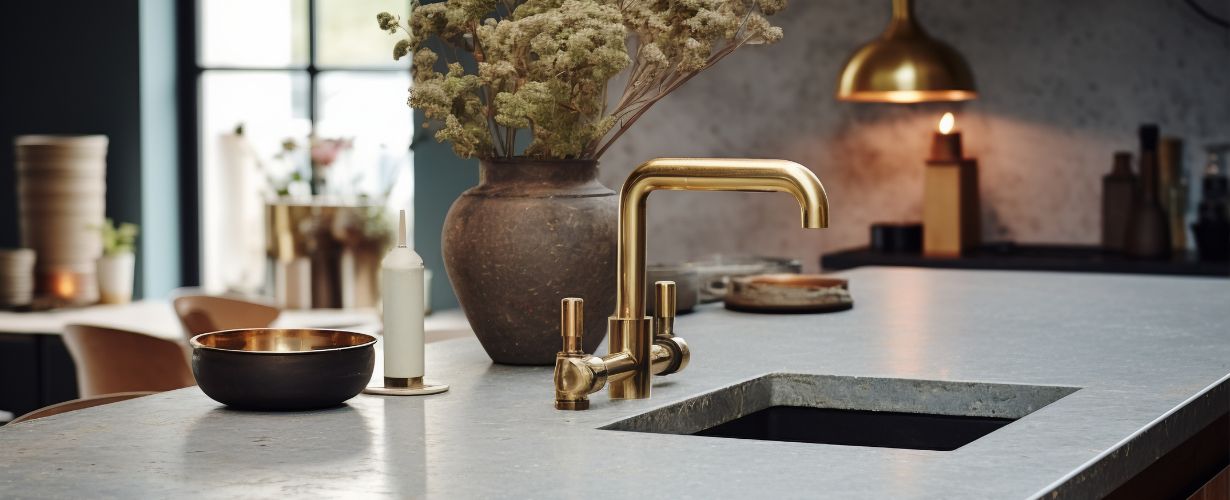
Stone countertops are more than just work surfaces. They are often the visual anchor of a kitchen or bathroom, the place where families gather, where coffee is brewed each morning, and where countless everyday moments unfold. At Granex Kitchen, we fabricate and install premium granite, marble, and quartz surfaces for homeowners across Long Island, and we frequently hear the same concern after a project is complete: “How do I keep these looking beautiful without ruining them?”
The irony is that most damage to stone does not come from neglect. It comes from good intentions paired with the wrong advice. People reach for powerful cleaners thinking they are protecting their investment, only to slowly strip the surface of its natural character.
Understanding how your stone works is the first step toward protecting it.
Why Stone Requires Specialized Care
Stone feels solid and permanent, yet it is a natural material with microscopic pores, mineral composition differences, and surface treatments that vary by type. Even engineered stone such as quartz blends crushed natural stone with resins that react poorly to heat or harsh chemicals.
At Granex Kitchen, we often restore countertops that were dulled not by abuse, but by well-meaning homeowners using products labeled “multi-surface” or “disinfecting.” These formulas are designed for ceramic or laminate – not stone.
Know Your Stone Before You Clean
Each material behaves differently.
Granite is durable and scratch-resistant, but it is porous. That means liquids can penetrate over time, especially if the sealant wears down.
Marble is elegant and timeless, yet softer than granite. It reacts chemically with acids, creating dull patches called etching.
Quartz is non-porous and highly consistent, but sensitive to high heat and aggressive cleaners that degrade its resin binders.
At Granex Kitchen, we educate every client on the specific care needs of the surface we install, because maintenance is never one-size-fits-all.
The Daily Cleaning Routine That Works
Forget the cabinets full of specialty sprays. The safest routine is refreshingly simple:
- Warm water
- A drop of mild dish soap
- A soft microfiber cloth
Wipe the surface gently, rinse the cloth, and dry. This removes debris without disturbing sealants or dulling the polish.
One homeowner told us they were surprised that the simplest method produced the best shine – after years of overcleaning with commercial products.
The Mistakes That Slowly Destroy Stone
Some of the most common damage we see comes from:
- Vinegar-based cleaners
- Lemon or citrus sprays
- Abrasive scrubbing pads
- Leaving wine, oil, or coffee spills unattended
- Setting hot cookware directly on quartz
A client once brought us photos of a marble island etched beyond recognition, the result of cleaning with a citrus-infused product for just a few months.
Sealing : What It Does and Why It Matters
Sealing does not make stone bulletproof. It slows absorption. For granite and marble, Granex Kitchen recommends resealing every 12 to 18 months depending on use. Without it, even water can begin to darken the stone permanently.
Q & A
Q: Can I use bleach on quartz?
A: No. It weakens the resin binders.
Q: Are chips repairable?
A: Often yes — Granex Kitchen offers professional stone restoration.
Q: Should I cut directly on granite?
A: No. Always use cutting boards to protect both blade and surface.
Long-Term Protection Habits
Use trivets. Wipe spills quickly. Avoid abrasive tools. These small habits extend the life of your investment far more than any cleaner ever could.
Final Thoughts
Stone countertops age beautifully when treated with understanding instead of force. At Granex Kitchen, we don’t just install stone, we help homeowners protect the heart of their kitchens for years to come.